Wednesday, October 17, 2007

26. Reconstruction and former slaves by Donovan Cabrera

How far did the reconstruction advance the position of the former slaves?
Links
These are a couple links to help you guys grasp a better concept of key point on what happen to the "poor old" slave.

2. http://www.encyclopedia.com/doc/1E1-KuKluxKl.html
*better understanding of the kkk (only first section)*

3. *better understanding of the Freedmen's Bureau*

Key Points

Reference

Read over chapter 22 for a wider range of information.

Question

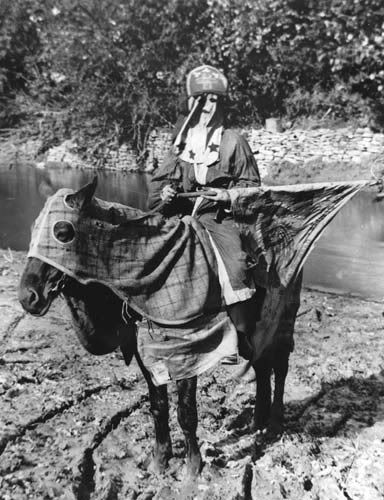
Due to the black codes and their harsh punishments could the slave be compared to indentured servants? What were the effects of reconstruction on the slaves? What effect did the Ku Klux Klan have toward the blacks when they rose?


14. What were the weaknesses of the Confederate political system.

What were the weaknesses of the Confederate political system, that both caused the downfall of the Confederacy as well as made it difficult to fight in the Civil War.

Damian Hernandez

Categories

•Economics

•State rights

•Power

•Foreign Dependence

Economics

•Agricultural

•Cash-crop based

•Crushing of the Cotton Kingdom

State Rights

•Clashing

•Secession

•Holding back help

•Executive branch vs. Legislative Branch

Power

•Jefferson Davis

•Impeachment

•“Every man for himself”

•Absolutely unstable ground

•The Confederate Constitution

Foreign Dependence

•Foreign Intervention

•Cotton

•Revolt/no-support

•North-dependence


Economics

·The South was mostly based on agriculture, instead of industry like the North.

·The focus on agriculture made the South weak financially

·This weakness in economics strained the capabilities of the Southern government, thus making compromises far more difficult in their Congress and made it nearly impossible to support troops.

·The South merely focused on cash-crops

· The focus on cash-crops became the largest contributor to the Confederacy’s economic downfall

· With the focus on cash-crops, the necessities such as food and clothing were scarce, thus making government even more strained; it was a country drowning in dismay.

· With the downfall of the cotton kingdom, the Confederacy’s economic prowess was gone and so was its trump card.

State Rights

· With the secession there came the power of the states’ rights, this was a country based on this, was it not?

· Because of those state rights ideas there was always a clash in Congress (Confederacy) and one state wanted help for itself, and forget the other

· With the focus on state rights, the focus on keeping the new nation was thrown out the window and a new “11 seceded colonies” were created.

· They worked as 11 different countries, and this was like a trip to the dentist for a root canal

· Because the nation was built by secession, logically they would be allowed to secede, unfortunately since the “countries” were selfish, light on this issue was diminished to a mere speck.

· Since the countries were selfish, they held back help in the Civil War, they held back compromise in Congress, they held back the hope of a strong unified nation

· Because of all the state rights activists running about in the Confederate Congress, Davis was always ramming heads with a festering spawn pool of Members of Congress.

· Again, a recurring point, compromise was apparently not an option

Power

· Jefferson Davis was the president of the Confederacy

· He was not very popular, and thus never had much support

· He wasn't “flexible” like Lincoln, and thus was not a very good leader for the time.

· Impeachment was always in the air, solely because Davis didn’t seem to be of any help, he wasn’t fully to blame there was just no hope compromising with such a pompous government

· The basic motto in the Confederacy, not literally just a concept, was “Every man for himself” there just wasn’t any joining of powers to help, every state took care of its problems and solely its problem, very little help would be sent for the Confederacy

· Doing anything in that damned Confederate Congress was like a death sentence

· You were basically walking on eggshells and it wasn’t likely you were going to get much support; you’d probably have a better chance talking to a brick wall.

· Next problem was the Constitution of the Confederacy, sure it was mostly based on the US Constitution, but one problem it openly allowed secession because then they would be working a hippocracy if otherwise.

· This open concept of secession just made it more difficult to have negotiation in the Confederate government.

Foreign Dependence

·One of the main problems of the Confederate government was its total dependence on foreign countries

· It was its trump card, foreign intervention, and it just didn’t happen to work out the way they planned.

· Europe wasn’t in dire need of cotton, it had a surplus from pre-war years

· Since Europe didn’t need the cotton, it wasn’t as prompted to help the Confederacy.

· Humanist books such as Uncle Tom’s Cabin inspired the working classes of Europe to side with the North.

· If the governments of Europe were to interfere, they would have no support, or worse revolt.

· Regardless, Europe was far too dependent on the North’s industries to take open part in the Civil War, so Europe was careful not to fully interfere.

The main points are lack of compromise and foreign dependence!!! But you still need the other points because they help support this!!!

5
Analytical
Touched all, or nearly all of the points
Showed varying viewpoints
Challenged the question, or investigated it thoroughly.
Strong thesis
4
Analytical
Touched nearly all of the points
Showed varying viewpoints
Somewhat challenged/investigated the question
“Upper end of the scale” thesis
3
Analytical or Narrative
Touched most of the points
Showed merely one or two sides
Slightly challenged/investigated the question
Average thesis
2
Narrative
Touched some of the points
Showed only one viewpoint
Did not challenge/investigate the question
Weak thesis
1
Narrative
Touched a few, or none of the points
Showed only one viewpoint
Did not challenge/investigate the question
No thesis/Weak thesis
0
Completely off topic
Did not turn in


16. Grant and Lee as Generals (Victoria)

Ulysses Simpson Grant

Based on pages 464-466 (The War in the West), pages 471-472 (Grant Outlasts Lee) in The American Pageant: Chapter 21 and other sources identified below.


Ulysses S. Grant was the commander-in-chief of the Union army after the failure and removal of five other generals; McClellan, Pope, McClellan (again), Burnsides, Hooker, and Meade.

His war philosophy was for the enemies to give an "Unconditional Surrender", hence his nickname.

Battles at Fort Henry and Fort Donelson

  • His first real success came in Tennessee with the capturing of Fort Henry and Fort Donelson in February 1862. This victory was important because it riveted Kentucky more securely to the Union and open the gateway to the strategically important region of Tennessee.

Battle At Shiloh

  • After this victory, he attempted to capture the junction of the main North-South and East-West railroads in Mississippi Valley. His plan was thwarted by a Confederate force in Shiloh on April 6-7, 1862. He successfully counterattacked the Confederates at Shiloh, this battle showed that there would be no quick end to the war in the West.

Battle of Vicksburg

Series of Battles Near Chattanooga

  • After the battle at Vicksburg, Grant was transferred to Tennessee. Here, Confederate forces had driven Union forces from the battlefield at Chickmauga into the city of Chattanooga, which they sieged. Grant then won a series of engagements in November 1863 near Chattanooga, including the Battle of Missionary Ridge and the Battle Above the Clouds (also known as the Battle of Lookout Mountain). He succeeded in liberating Chattanooga, freeing the state of Confederates, and opening a gateway into Georgia. (General William Tecumseh Sherman then proceeded to invade Georgia and the Carolinas through this route.)
  • After the Battle at Gettysburg, Grant then replaced Meade as the commander of the Army of the Potomac because Meade failed to pursue Lee after the defeat. At this time, Lincoln needed someone to pursue Lee because two previous generals, McClellan and Meade, let him slip right through their fingers.

Grant's Overland Campaign


(The following section will briefly touch upon the major points of the Overland Campaign and relate them to Grant as a general. To find out more, go here: http://www.nps.gov/archive/rich/ri_cold.htm and here: http://www.nps.gov/history/hps/abpp/battles/bycampgn.htm)


Wilderness Campaign

  • Grant's strategy was to attack all the forces simultaneously so they wouldn't be able to assist each other. Grant, with 100,000 troops went to Richmond and fought General Lee in a series of battles in the wilderness of Virginia in May-June 1864.
  • Grant lost 50,000 troops but Lee lost about as heavily in proportion.

Battle at Cold Harbor


Go here for more information: http://www.nps.gov/history/hps/abpp/battles/va062.htm

  • On June 3, 1864 , Grant ordered a frontal assault on Cold Harbor. In a few minutes, 7,000 men were killed or wounded.

Conclusion


  • Northern troops captured Richmond, the Confederate capital, and cornered Lee at Appomattox Courthouse in April 1865. Grant then met with Lee and granted generous terms of surrender.


Robert Edward Lee

Based on pages 452-456 ("Tardy George" McClellan and the Peninsula Campaign), pages 457-458 (The Pivotal Point: Antietam), pages 462-464 (Lee's Last Lunge at Gettysburg), and pages 471-472 (Grant Outlasts Lee) in The American Pageant: Chapter 21 and other sources identified below.

Lee was the commander-in-chief of the Confederate Army during the Civil War. Politically, he was a Whig. Ironically, he was attached strongly to the Union and to the Constitution. He entertained no special sympathy for slavery. Yet he fought on the side of the Confederacy because he held a strong attachment to his state, Virginia, and he said that he would never fight against it.

The Seven Days Battle (June 26-July 2, 1862)

  • In response to the Peninsula Campaign being launched by General McClellan of the Union army, Lee launched this battle which drove McClellan's army back to the sea from whence they came. (For more on the Peninsula Campaign, refer to Pablo's blog, which covers the major campaigns of the war. You can also go to this link for more information on the Seven Days Battle: http://www.historycentral.com/CivilWar/Seven.html)

The Second Battle of Bull Run (August 29-30 1862)

  • At this battle, Lee encountered General John "Spoons" Pope and inflicted a crushing defeat. (For more information, go here: http://www.historycentral.com/CivilWar/SecondManassas.html)
  • The victory in this battle caused Lee to attack Maryland in hopes of encouraging foreign intervention and seduction of the Border States. (For more on the Border States, refer to Jose's Blog on the topic.)

The Battle of Antietam Creek

  • Events in Maryland finally exploded at Antietam. With special intel, (Lee's battle plans) McClellan was able to stop Lee's invasion in one of the bloodiest battles of the Civil War. The outcome of the battle was more or less a draw, but Lee retreated afterwards and McClellan didn't pursue him. (This resulted in McClellan's final removal from the commander position of the Union Army.) (For more information, refer to Pablo's blog on Antietam)

Minor Victories Against Experimental Union Generals

  • After McClellan's removal, General A.E. Burnsides replaced him. But to protest his position, Burnsides attacked Lee's stronghold in Fredericksburg, Virginia. Lee's army decimated them. This battle, Burnsides's Slaughter Pen, resulted in the deaths of 10,000 Union soldiers.
  • Burnsides's command was then transferred to "Fighting Joe" Hooker. In the Battle at Chancellorville, Virginia, Lee divided his numerically inferior army and sent "Stonewall" Jackson to attack. This resulted in Lee's most brilliant Confederate victory. "Stonewall" Jackson was killed by friendly fire in this battle.

The Battle at Gettysburg

  • The victory at Chancellorville encouraged Lee to attempt to invade Gettysburg, Pennslyvania in a hope of netting foreign intervention from Britian and France. The charge would be led by General George Pickett. Meade, Hooker's replacement as commander of the Union army, set his troops up near Gettysburg and fought Lee's army for three days. This resulted in a Union victory which broke the back of the Confederate attack and the heart of the Confederate cause. After this battle, all hopes for foreign intervention were lost. (For more information on this battle, refer to Pablo's blog)

The Final Curtian of The Civil War

  • The Wilderness Campaign (refer to above for more information) and other battles with General Grant of the Union army led to the eventual defeat of the Confederate army. (Refer to above Wilderness Campaign, The Battle of Cold Harbor, and Conclusion for more details)

In conclusion, both Grant and Lee were supurb generals of their respective armies and they both fought valiantly to defend their beliefs. In the end, however, as it always is, the best man won.

Wartime Politics: civil liberties and the election of 1864

During the Civil War, civil liberties were completely violated. It included the bill of rights as well as other important part of the constitution. Lincoln took it upon himself to extend his rights as president. He spent unauthorized money, set up blockades in the south, initiated martial law, and trampled through the constitution.

Lincoln violated the freedom of speech when he suspended habeas corpus. With this persons did not have to stand before a judge, and could be thrown in jail with out any charges. In one case, John Merryman was held in jail without any formal charges. Merryman petitioned the government, and Chief Justice Robert Taney granted it. However, even with this, the jail refused to let him go. He was left in jail seven weeks before being freed.

McClellan became Lincoln’s opposition during the election of 1864. By August of the same year, Lincoln believed his plan for re-election was in danger. However, this proved untrue after he raced ahead in the campaign, earning 55 percent of the popular vote. It was caused by two factors: the Union military’s success and supporters campaigned and successfully revealed the disloyal democratic platform.


http://www.bookrags.com/research/civil-liberties-civil-war-aaw-02/

http://www.pbs.org/moyers/journal/07132007/civilliberties.html

John Merryman: http://www.tourolaw.edu/patch/Merryman/

http://www.civilwarhome.com/elections1864.htm

22. Effects of Reconstruction on freedmen, and on the White South :)

This website has information on the freedmen of the Civil War.
http://www.civilwarhome.com/freedmen.htm

Pages 479-481 Freedmen Define Freedom & Freedmen's Bureau
Page 483 Presidential Reconstruction (Right column, first paragraph) up to 484
Pages 484-485 Black Codes & Congressional Reconstruction
Page 491 Radical Reconstruction in the South
Page 492 Definition of Carpetbaggers
Pages 493-494 The KKK


  • The minority radical group believed that the South should atone more painfully for its sins. Before the South should be restored, the radicals wanted its social structure uprooted, the haughty planters punished, and the newly emancipated blacks protected by federal power.


  • Among the first acts of the new Southern regimes sanctioned by Johnson was the passage of the irontoothed Black Codes.
  • Black Codes were established by state legislatures to keep the former slaves "under control". (Obviously, they infuriated the North) They varied from state to state and did give blacks some rights they did not have before: the power to sue in court, own certain kinds of property, and legally marry. However, they also prohibited them from bearing arms, working in most occupations other than farming and manual labor, or leaving their jobs without permission.


  • Now the slave was 5/5 of a person.
  • The sight of former slaves holding office deeply offended their onetime masters, who lashed out with particular fury at the freedmen's white allies, labeling them "carpetbaggers."
  • Freedman's Bureau was designed to help the freed slaves during their transition from slavery to freedom by providing food, education, and other support.


  • The rebel states were entitled to twelve more votes in Congress & twelve more presidential electoral votes...Who really won the war?
  • Many whites resented the success and ability of black legislators
  • A number of secret organizations mushroomed forth...The most notorious--> "Invisible Empire of the South" or Ku Klux Klan (founded in Tennessee in 1866)

Photobucket - Video and Image Hosting


1865
Southern states begin to pass "Black Codes" ­ these laws subject former slaves to a variety of restrictions on their freedom: they forbid blacks to testify against whites; they establish vagrancy and apprenticeship laws; blacks cannot serve on juries, bear arms, or hold large meetings.
1865
The Thirty-ninth Congress convenes ­ It is the first session since Lincolnís death. All Confederates states, with the exception of Mississippi have formally accepted presidential requirements for readmission to the Union and representation in Congress. Led by radical Thaddeus Stevens, the House simply omits the southerners from roll call, effectively denying them admittance. It then proceeds to discuss punishment for the rebellious South which according to Radical Republican Charles Sumner has committed "state suicide".
1865
The Ku Klux Klan is formed in Tennessee ­ it is one of the many secret societies set up to terrorize blacks. Its methods become ever more vicious as whites become more certain that their old way of life is being threatened.
1866
Johnson vetoes Freedmenís Bureau bill and Civil Rights Act of 1866; a modified version of the Freedmenís Bureau bill later passes.

1866
14th Amendment passed by Congress ­ grants full citizenship to blacks, gives the Federal government the responsibility to protect equal rights under the law to all American citizens.


Essay Question

What was the purpose of the KKK? What did they hope to achieve? What methods did they use?


Liliannis Ochoa


Border States Key Decision By Jose Vasquez

Here a link about the Border States Role in Lincoln Decision on the war
http://history-world.org/border_states_in_the_civil_war.htm
http://www.sparknotes.com/history/american/civilwar/section5.rhtml (Section of the Border States and the Importance of the Border States)

Also Read the following pages

Chapter 20
Section Brothers' and Border Blood page 436-438
Chapter 21
Section A Proclamation without Emancipation page 458-460

Key point
* Affected the decision of Lincoln of making the Civil War at the start a "total war" in which the Union would be saved and slavery would come to an end.
* Force Martial Law and threatened to cut off Washington from the north.
* Affect how Lincoln dealt with his Emancipation Proclamation in which he allowed slavery in the Border States.
* Force Lincoln to be very careful in the way he acted about the issue of slavery in order to maintain the Border States.


Question
What effects would the Border States have had on the Union if they decided to seceed? How would Lincoln decision have changed from a war to save the union to a total war from the beginning? Were the Border States the differences between the Union defeating the Confederacy then The Confederacy defeating The Union? explain.

The Kansas-Nebraska Act


  • In what way did the Kansas-Nebraska Act contribute to the outbreak of the Civil War? Do you think the war still would have occurred if the Kansas-Nebraska Act had not been passed? Explain


  • Franklin Pierce (1853-1857)
    Democrat
    Cuba/Nicaragua
    Transcontinental Railroad
    Kansas-Nebraska Act
    Lecompton Constitution w/Kansas
    Served 1 Term


  • Popular sovereignty: this compromise solution was first proposed during the time of the Wilmot Proviso: the residents of each territory had the option of determining whether it would be a free or slave state; a part of the Compromise of 1850 and Kansas-Nebraska Act of 1854.Stephen Douglas a strong advocator.


  • Stephen A. Douglas: American politician known for his debates with Abraham Lincoln prior to the election of 1860. Douglas was an advocate of the annexation of Mexico, who aroused the question of slavery in territories with the development of the Kansas-Nebraska Act in 1854. He was also a strong supporter of the Compromise of 1850.


  • The Kansas-Nebraska Act was a bill like the Compromise of 1850.


  • On May 30, 1854 the territories of Kansas and Nebraska wanted to become states. The only question left to be decided was whether they would have slavery or not.


  • Stephen Arnold Douglas, the Democratic Senator of Illinois, strongly believed that the people of the territories should decide for themselves whether they wanted slavery and repealed the Missouri Compromise.


  • Proslavery and antislavery groups fought many wars, each side wanting to gain control of Kansas so they could vote for it to become a slave state or a free state. These wars are known as "Bloody Kansas." Neither side knew it, but with each day of fighting, they were getting a step closer to the Civil War.


  • Bloody Kansas, also known as Border War, was a conflict in Kansas territory between antislavery Free states and proslavery groups.


  • The act enforced popular sovereignty upon the new territories but was opposed by Northern Democrats and Whigs.


  • The bill later became a law on of the territories could decide by popular vote whether to allow slavery to continue in a place when it becomes a state.


  • The act caused Northern abolitionists to fight against proslavery Southerners.


  • The act caused the Whig Party to split into northern and southern branches.


  • The northern branch wanted to end slavery and the southern branch wanted slavery to continue.


  • The Antislavery Army led by John Brown, an abolitionist, wiped out the proslavery troops. John Brown led one famous battle on the settlers at Pottawatomie Creek. This attack was called the Pottawatomie Massacre and occurred in May 1856.


  • Northerners did not have a need for slaves because there they manufactured (shipping and bankers).


  • Southerners wanted to expand slavery because they were based on it for the faming and plantations.


  • When people in Missouri voted in Kansas, the proslavery Party won control, and Kansas was voted to become a slave state. Later, Kansas asked Congress for statehood as a slave state. But the Missouri Compromise did not let slave above the line.


  • While the proslavery Party was upset and angry over this decision, the antislavery Party quickly took control of Kansas.


  • The north and south argued and fought over the question of slavery each time a new state wanted to enter the Union. The south finally got so tired of all the fighting and arguing that they decided to break away from the U.S. and be their own country. Fighting over whether the south would be its own country finally started the Civil War.


  • http://edsitement.neh.gov/lesson_images/lesson661/Kans_Neb_Debate.pdf